
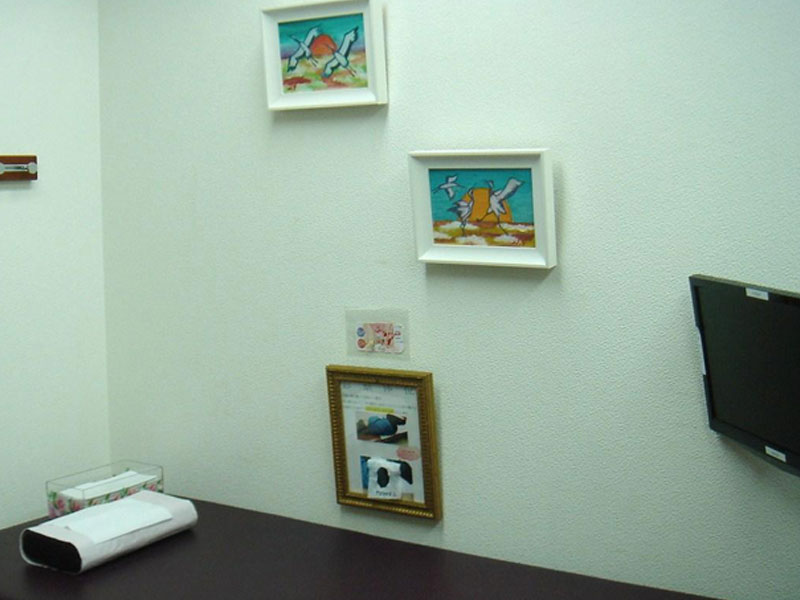
Your examination, step by step
At a first visit we take your history before examining you. You lie mainly on your left side, and — particularly for women — we use a cloth with an opening in it, so that only the area being examined is uncovered and your buttocks are not left exposed.
Before any instrument is used, the doctor palpates the area gently to gauge pain and how tense things are. A digital rectal examination follows, which matters a great deal for checking the rectum for bleeding, tumours or a mass. For the anoscope at a first visit we use a tubular type that causes almost no pain. If you would like, we can show you the anoscope image in real time and talk you through it.
We also treat anal fistula, anal fissure, thrombosed external haemorrhoids, perianal abscess and pruritus ani. What people conclude for themselves often differs considerably from the diagnosis, so a proper examination comes first. In most cases the diagnosis is made there and then, though some need to be followed over time — and with fissures and haemorrhoids in particular, examining with a different type of anoscope (chosen with pain in mind) can be important. For a fistula, palpation is the key examination, supported by ultrasound and MRI. Information about discharge, bleeding, swelling, constant pain, pain only when sitting, or being unable to sleep matters just as much.
If the symptom will not show itself in the clinic
Prolapsing haemorrhoids in particular may not be apparent during an examination here, appearing only at home or only after childbirth. In that situation a photograph you have taken yourself, on a smartphone, can be the one piece of information that makes the diagnosis — we have had cases where an image a patient brought in significantly shaped the choice of treatment. This is not limited to haemorrhoids: if you think a symptom is important, bringing an image of it genuinely helps.
Some proctologists have begun making the case for this publicly — among them Dr. Masatoshi Sasaguchi of Seishinkai Yoshida Hospital, who has written about it in the regional press.
Often things turn out to be less serious than feared. In most cases the diagnosis is made at a single visit, and hearing what the condition actually is — and seeing the images, if you want to — is frequently enough to put the worry to rest.
When a colonoscopy matters
Blood on the stool, discomfort when opening the bowels or a change in bowel habit can also point to disease of the large bowel — colorectal cancer, inflammatory bowel disease, or polyps, some of which are precancerous. Even when bleeding is coming from haemorrhoids, a colonoscopy is still needed, because anoscopy alone cannot examine the colon. See gastroenterology.
Thrombosed external haemorrhoids
People come in with a lump that has appeared suddenly, discomfort on sitting, pain on walking, or sudden bleeding. Constipation, diarrhoea or work that keeps you immobile lead to a blood clot forming inside the haemorrhoidal vessels, which then swells and becomes painful. Treatment is mostly oral and topical medication with observation; where symptoms are severe we discuss it with you and remove the clot under local anaesthetic.
Perianal abscess
Pus collects around the anus or deeper in. People come in with continuous anal pain that has been getting worse, unable to work or sleep, sometimes with a fever. The diagnosis can usually be made by palpation and inspection, with ultrasound to judge how far it extends and where it is. Some cases look like nothing much — and that is where the diagnosis is hard, and where a facility without the experience will often say "it's haemorrhoids, use the ointment and let's see how it goes."
We drain every case immediately under local anaesthetic; the anal disease guidelines call for drainage whatever the state of things. Depending on the extent and position of the abscess, lumbar anaesthesia may be needed, or a soft tube left in place. Most people get better with this, but close to half go on to develop an anal fistula needing definitive surgery, which makes follow-up afterwards very important.
Haemorrhoids: treatment and same-day surgery
ALTA (Zione) injection sclerotherapy
A treatment that has been getting media attention in Japan since around 2013. ALTA — aluminium potassium sulfate and tannic acid, sold as Zione® — is injected into the haemorrhoid, causing a sterile inflammation that hardens and shrinks the tissue. It is a considerable improvement on the older almond oil (PAO) injections, which lasted only a few years. It has been covered by insurance since 2005, more than 600,000 people have now had it, and the safety data behind it is well established.
Compared with conventional ligation and excision — cutting the haemorrhoid away — it puts far less strain on the body, and there is almost no pain or bleeding when opening the bowels afterwards. There is also no scarring and tethering from an incision to worry about. No hospital stay is needed and it can be done under local anaesthetic, though for most people we recommend sacral epidural anaesthesia, given the tension and discomfort during the procedure. Above all, you can be back at work two days later.
ALTA injection combined with ligation and excision
ALTA is not indicated for external haemorrhoids, so conventional ligation and excision is combined with it — and a fair number of people report significant pain afterwards. So here we deal with the external haemorrhoid through a small incision and inject ALTA into the internal haemorrhoid, keeping the area excised to a minimum in order to reduce pain on opening the bowels afterwards.
Ligation and excision (LE)
The standard operation worldwide. Pain when opening the bowels afterwards is not light and there is a real risk of bleeding, but its cure rate is high. Returning to work is typically around day 5 to 8.
Rubber band ligation and separation ligation
Rubber band ligation applies only to internal haemorrhoids: a band is placed around the haemorrhoid so that it dies off and is shed. There is almost no pain, and in most cases it can be done without anaesthetic.
Separation ligation ties off the base of the haemorrhoid with a thread so that it dies off and is shed. Because nothing is cut, there is less pain than with excision and less risk of bleeding.
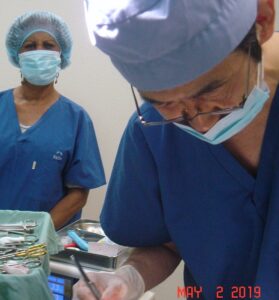
Anal fistula: the main operations
Treatment of an anal fistula is fundamentally surgical (Clinical Practice Guidelines for Anal Disorders, 2020). Which operation suits you depends on where the tract runs and how much sphincter is involved.
Lay open
The most curative approach — the only one the guidelines give a grade A recommendation — with recurrence reported at 5–7% (Rosa G., Lolli P. and others). Sphincter is normally sacrificed, but in day-to-day life most people find this causes little difficulty.
Seton
Described in India (Sushruta Samhita) and, we are told, practised in Japan since the Edo period; it has been reappraised recently and is now widely used. A rubber band placed in the tract is gradually tightened so that the tract is divided over time, which allows the sphincter to be protected to a degree, with recurrence figures close to those for lay open. Guideline recommendation grade B.
Core out
Possibly common at non-specialist facilities. In principle it is the ideal approach, but recurrence is not rare; specialist centres, or surgeons who are particularly good at it, may choose it in the right situation. Guideline recommendation grade B.
Fibrin glue (fibrin sealant) — for reference
Not covered by insurance in Japan, and results overseas are not consistent, with reported recurrence of 30–80%. We do not perform it.
A note: an operation described by Dr. Rojanasakul of Thailand in 2007, dividing part of the tract while barely touching the sphincter, drew a lot of attention. The director heard him speak in Yokohama in 2014 — a memorably passionate talk. Recurrence, however, is not rare, and recent practice seems to combine it with conventional techniques.
Fistula surgery at this clinic
Dr. Rikisaburo Sahara of Makita Hospital operates in a way that preserves anal function, and following his lead we place as much weight on function as we can. In operations where even the internal sphincter was preserved, there have been virtually no recurrences. Since 2017, around 50% of the anal operations performed here have been for fistula — where the usual proportion is 10–20% of anal surgery.
Anal fissure
Some people arrive alarmed by bleeding or pain when opening the bowels. Those who come in soon after the symptoms start mostly have an acute fissure: the pain is relatively strong, but once the diagnosis is made and the worry lifts, and the underlying constipation or heavily spiced food is corrected with some guidance, most do well.
Chronic fissure
Where the anus has narrowed, where ointment has not worked, or where symptoms have gone on for years and been left alone, it can become difficult to treat, and surgery is then an option. Because bowel habits — constipation, diarrhoea — are the underlying cause, recurrence after surgery is possible, and operating once considerable narrowing has set in can be complicated, so coming in and being treated early is advisable. In practice, what we see after the operation is people back to opening their bowels comfortably for the first time in a long while, plainly relieved.
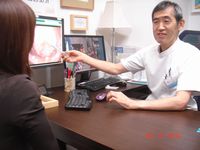
IT in anal care
We use the digital anoscope during examinations and during surgery, and where you would like it we show you the images and proceed once you are satisfied. Depending on the condition, the choice of operation — injection or excision, say — may be something we look at together on screen at each decision point and settle by discussion.
Pruritus ani
We start by examining for a cause: prolapsing haemorrhoids producing the discharge behind it, or a fistula, which is inflammation in itself. Alongside the examination we test for fungi and bacteria, choose an appropriate ointment or other treatment, and follow it up. Through that period changes in the skin matter, so we record images and watch how they change. Some eczema has no identifiable cause, but most improves with ointment and advice on daily habits.
See our surgical results for the numbers behind all of this.
Ready to visit us?
Book online, or call — our receptionists speak English and will guide you through your first visit.